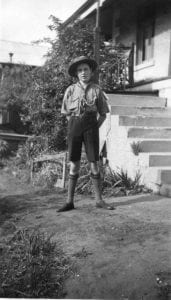
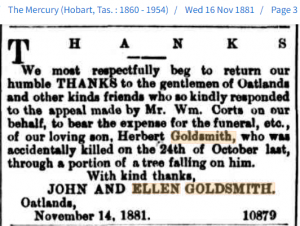
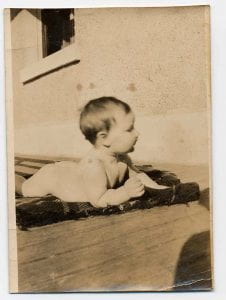
Keith Henry Avery known as Harry was the 2nd of three children born to Robert and Ellen Sarah Avery nee Goldsmith.
- Oscar Clyde Avery born 20 Nov 1903
- Keith Henry Avery born 21 June 1906
- Gwendoline Edith Avery born Scottsdale, 30 December 1909
Harry was born in St Helen’s, a fishing town on the east coast of Tasmania. On his birth certificate, it says his father was a miner.
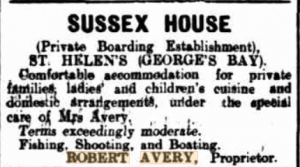
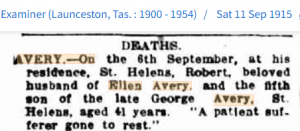
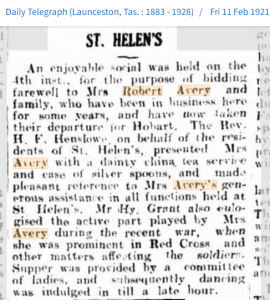
From April 1904, his parents ran a boarding house with Ellen doing most of the inside work and Robert doing the labour work outside. But in 1915, Robert passed away leaving Ellen to bring up three young children. During the war years, Ellen was very involved in local functions, especially the Red Cross and the soldiers that returned.
Both Oscar (1919) and Harry (1921) had qualified for admission into state high school – each year only 12 students from St Helens qualified.
It was now that Ellen moved them to Hobart. There was a grand farewell from the residents of St Helen’s on 4 February 1921.
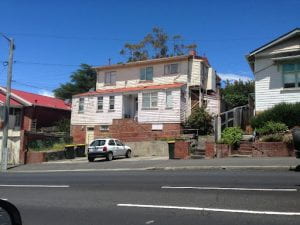
The first official mention of Ellen and her family living at 160 Goulburn Street, West Hobart, was 1923 in the Post Office Directory.
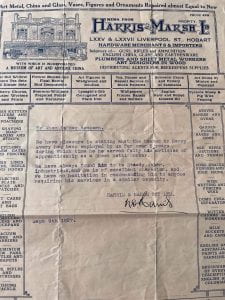
In 1921, Harry was apprenticed with Harris and Marsh and trained as a tin smith. It was a six-year apprenticeship.
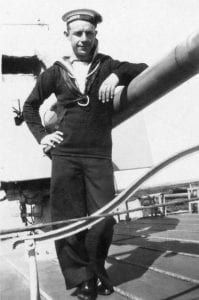
On 17 February 1921, Harry registered as a cadet in the Royal Australian Naval Reserves. He was living at 160 Goulburn Street according to his papers. His mother Ellen was at 298 Bathurst Street and was doing domestic duties. Harry was only 5 feet 3 and a half inches tall and was a plumber’s apprentice.
His original rating was cadet signal, presumably this included semaphore and wireless telegraphy. He was part of the 40th Battalion in Hobart.
In the first year he served just over 5 days with military training. In 1922, he served 17 days again military training. On 1 July 1922 he was transferred from 40th Battalion to Naval.
Harry was thrown from a motor cycle and put in hospital from injuries in November 1923 and this absence is noted in his naval records.
In 1923 and 1924, Harry served many full day, half day and quarter days in naval training. His record says satisfactory ability, efficient and very good character.
On 29 May 1924, he was medically examined and found fit for the Citizen Naval Forces.
From 25 February 1925 until 13 March, he served on HMAS Tasmania. In 1926, he spent 16 days at the Naval Drill Hall in Hobart. He also spent 17 days in July on HMAS Marguerite. In October 1927, he spent 17 days on HMAS Swan which was based in Launceston. In April 1929, he spent 5 days training at the Naval Drill Hall and his final training mentioned on records was in October/November 1929 at the Drill Hall.
In September 1924, he was promoted to signalman, then in August 1926, promotion to leading signalman and finally in November 1927 to yeoman of signals.
When Harry finished his apprenticeship, he received a great reference from Harris and Marsh company.
By the 1928 electoral roll, Harry, a sheet metalworker, and Oscar, a clerk were still living with their mother in Goulburn Street. In 1929 electoral roll, a William Wyatt was also living at 160 Goulburn Street. He was a labourer and part of the Royal Australian Naval reserves.
During this time, William Wyatt married Irene Smith and had a child together, Robert Wyatt known as Bob. But in early 1930’s, William left the marriage and went to New South Wales.
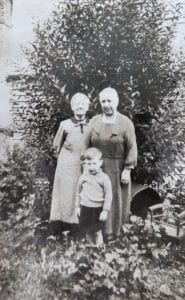
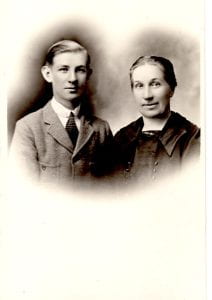
Harry became Bob Wyatt’s foster father even though he considered Ellen, Harry’s mother, as his foster mother from the early 1930’s. Harry once told Bob, that he was his mother’s saviour as she had lost a son, Oscar, in 1930 and her only daughter, Gwen, in 1929 with diphtheria and she was very depressed until she had to look after him.
By this time, Harry was working at Cadbury’s Chocolate Factory in Claremont, Tasmania. Harry had met an old man on a tram who suggested Cadbury’s would be a better and cleaner place to work instead of the Zinc Works.
In 1936, the electoral roll only had Ellen and Harry living at 160 Goulburn Street.
Harry married Violet Grahame Masterton in 1937 and lived at 192 Main Road, Moonah almost opposite the fire station. A picture of the bride and her attendants was in the local paper.
In March 1938, Harry was involved in a car accident in Hobart. Harry and his wife, plus another passenger, appeared as witnesses at the inquest of the death of Robert Elliston in North Hobart. The coroner declared it an accidental death as Elliston stepped off the kerb with his head down.
In July 1938, Harry was a groomsman at his sister-in-law’s marriage to Rupert Bryant Carr.
At the Christmas social event for Cadbury’s Chocolate Company in 1939, Harry was one of many employees who presented a musical item. His friend John Kean, who had been the passenger in the accident in 1938, also presented at the social.
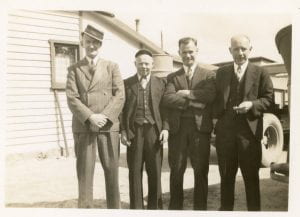
Harry was not expected to take part in the war as he was working in a protected industry. Cadbury’s chocolates were sent to all soldiers often during the war and can be seen on many of the advertisements of that time period. During this time period Harry would make camouflage nets for the war effort.
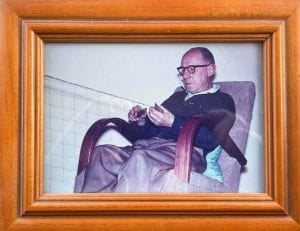
On Monday 12 February 1940, Cadbury’s company held a picnic at South Arm for its employees. Harry was noted as coming second in the obstacle race. There were a few other unusual events if you read the newspaper article.
It also looks like Harry was treasurer of the Engineering department at Cadbury’s as he was mentioned in an article organizing a Christmas social event.
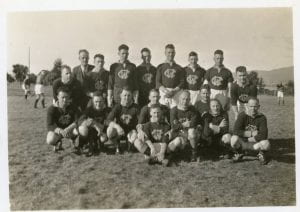
In July 1941, another of his sisters-in-law married and Harry was an usher this time. Again, at a wedding in January 1942, Harry was an usher. The surnames of the bride and groom have also been mentioned in other newspaper articles about Cadbury’s.
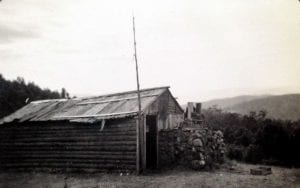
Harry enjoyed the outdoors and would often go camping using ridge pole tents for shelter. He would usually take Bob and other friends from Cadbury’s on these adventures.
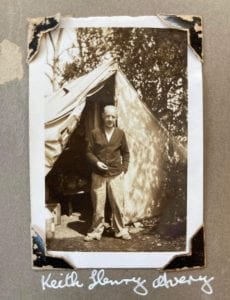
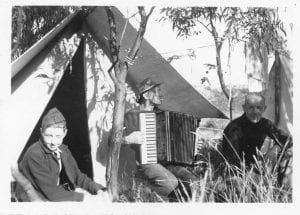
Harry built his wooden dinghy in the back yard at Moonah and Bob recalls helping him to rivet the planks. Mrs Avery used to take Bob to visit her son and his wife who he called Topsy. Harry would run them home in his car. His garage was only a shed with a curtain to protect the car from the weather. Harry had room inside that he used as a workshop and it was here that he made stencils for Jones & Co. Some time later Harry deserted Topsy and returned to live with his mother in Goulburn Street. Violet was granted a decree nisi for an undefended divorce case in April 1953.
Harry had re-joined his mother at Goulburn Street by the time of the 1949 electoral roll where he was still identified as a sheet metal worker.

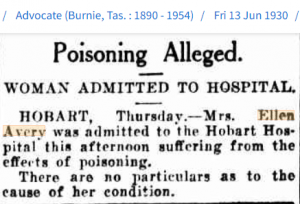
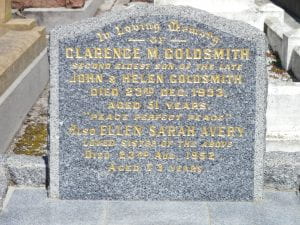
In 1952, Harry’s mother passed and was buried with her brother in Cornelian Bay Cemetery. Harry and Bob put a bereavement notice in the local paper thanking friends and relatives.
Harry won fifth prize in the Sandy Bay Football Club raffle in September 1953.
The house at Goulburn Street was too big for just the two of them so it was at this time that Harry purchased a house at 6 Brent Street, Glenorchy and both Bob and Harry lived there.
Bob remembers that Harry let him drive his utility when they went to look at the house there and as they left Bob (aged 19 at the time) backed into a Hydro pole. Fortunately it was only a slight bump with very little damage.
Bob married in 1954 and his family grew up at Brent Street. Harry lived there with the family as well.
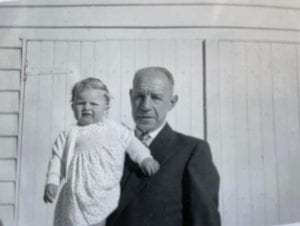
In July 1961, Harry married Joyce Unice Harwood. This was a second marriage for them both as Joyce had been married to Darrell James King from Geeveston area of Tasmania but he died in 1948. It was at the time of this marriage that Harry sold the Brent Street property to Bob who borrowed the money to pay the original purchase price paid by Harry back in 1952.
Harry, Joyce and her sister then lived in two units at Conneware Crescent in Berriedale.
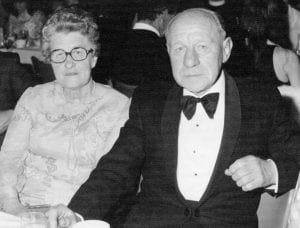
Harry and Joyce lived their final years at Wakehurst Road in Austins Ferry.
Under the house at Austins Ferry, Harry had a fantastic shell lighthouse which Bob’s children always asked for him to turn on so they could see the flashing light. He also had a great collection of shells. Harry loved his garden and had bountiful raspberry canes against the fence at this house.
Harry and Joyce were invited to many events relating to the Wyatt family.
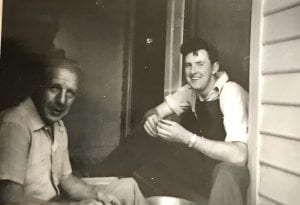

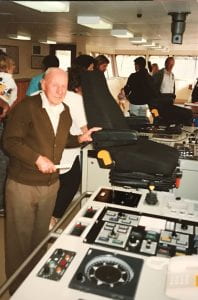
Joyce passed away in 1980 and is buried at Cornelian Bay. Harry passed away on 20 December 1996, aged 90. He is also buried in Cornelian Bay Cemetery and Crematorium.